
D2C vs. Marketplace Selling: Why Shopify Brands Are Going Direct
D2C vs. Marketplace Selling: Why Shopify Brands Are Going Direct in 2026
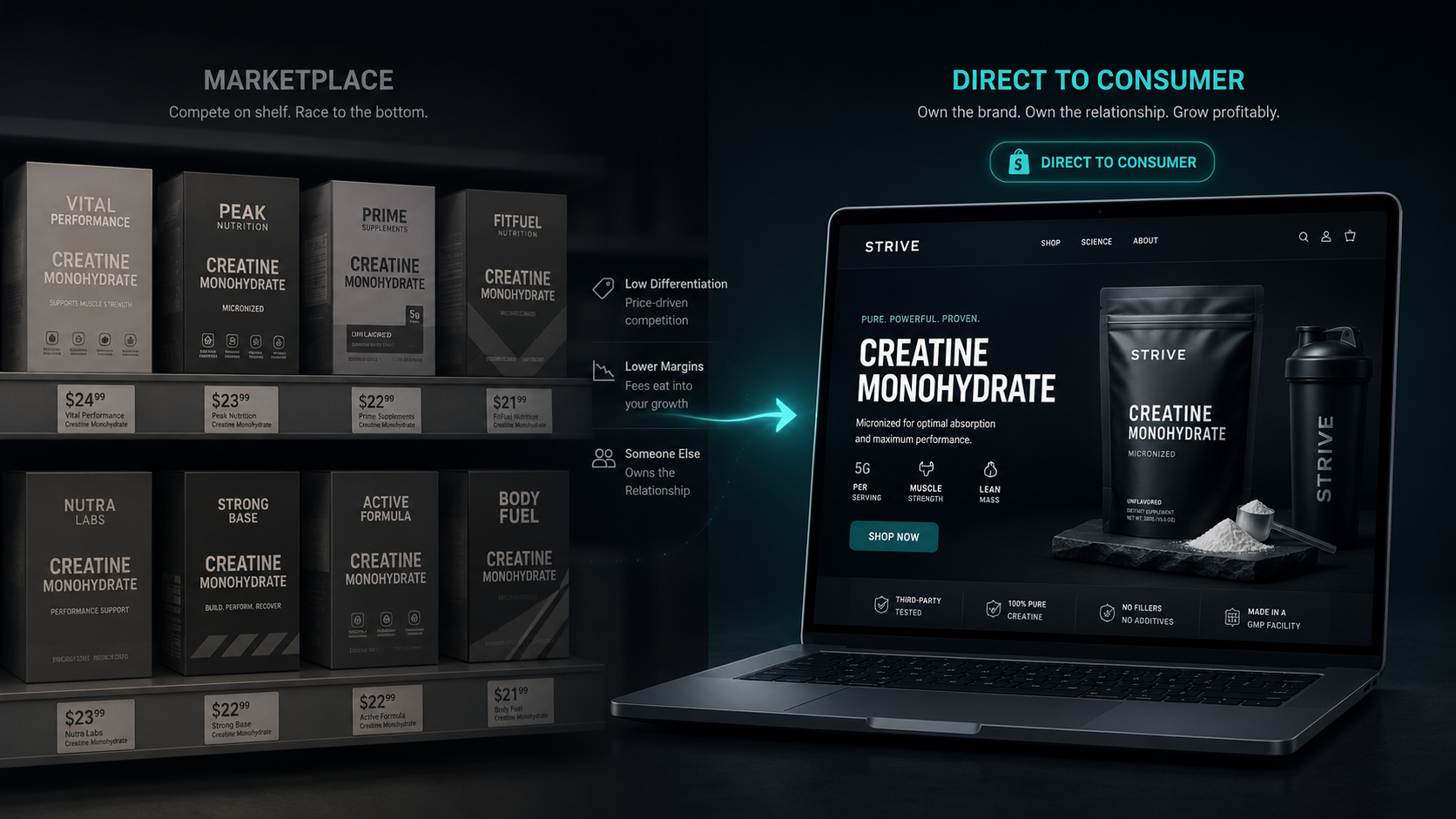
Every brand selling online eventually faces the same fork in the road: keep relying on marketplaces like Amazon for sales, or invest in building a direct-to-consumer channel through a Shopify store.
It's not a small decision. The model you lean into shapes your margins, your customer relationships, your brand equity, and ultimately how much of your business you actually own.
In 2026, that decision has gotten more nuanced — not simpler. The global D2C market is projected to reach $319.57 billion this year, growing at a 7.8% CAGR through 2035. At the same time, the brands winning aren't the ones who abandoned marketplaces entirely. They're the ones who understood exactly what each channel is good for, and built their strategy accordingly.
This guide breaks down what D2C actually means, why so many Shopify brands are shifting investment toward owning their direct channel, where marketplaces still make sense, and how to think about building the right mix for your business.
What Is D2C, and How Is It Different From Marketplace Selling?
Direct-to-consumer (D2C) commerce refers to products sold by brand manufacturers directly to consumers via owned and operated websites, apps, and physical stores, bypassing traditional retail intermediaries entirely.
Marketplace selling, by contrast, means listing your products on platforms like Amazon, Walmart Marketplace, or Etsy — where the platform owns the customer relationship, controls the checkout experience, and takes a commission on every sale.
The core distinction comes down to who owns what. Traditional B2C relies on retail partners or marketplaces to handle selling products, while D2C removes these middlemen, giving brands direct access to their customer base. A more streamlined supply chain leads to significant cost savings and higher profit margins, and creates a tighter loop for customer feedback.
When you sell on Amazon, the customer remembers buying from Amazon — not necessarily from your brand. Brands operating only on marketplaces often struggle to build brand recall outside the platform, and over time, that weakens long-term equity.
When you sell through your own Shopify store, every interaction — the website experience, the packaging, the follow-up email, the loyalty program — belongs to your brand. That ownership is the entire premise behind why D2C matters.
The Numbers Behind the Shift Toward Direct Selling
The data on D2C growth in 2026 paints a clear picture of momentum, even as the model has matured past its pandemic-era hype cycle.
US DTC ecommerce sales reached $212.9 billion in 2025, a 16.6% increase from 2024, and DTC now accounts for 19.2% of all US retail ecommerce. There are over 110,000 DTC businesses currently operating in the United States, the majority of which are digitally native brands that launched online first. D2C brands overall are growing at a compound annual growth rate of 15.4% — outpacing traditional retail growth by a wide margin.
The reasons brands are pushing harder into direct channels go beyond just growth numbers. More than 55% of US consumers say they feel more connected to brands when shopping on their websites, and nearly 60% shop directly with brands specifically for exclusive benefits. Shoppers consistently cite brand websites as leading sources of trusted product information, particularly in categories like electronics and apparel.
There's also a data ownership argument that's become more urgent every year. As privacy regulations tighten across regions, first-party data is becoming more valuable. D2C stores collect emails, behavioral data, and purchasing history directly — supporting personalization, loyalty programs, and retention strategies in ways marketplaces simply restrict.
Why Marketplaces Still Matter (And Aren't Going Away)
It would be misleading to frame this as D2C winning and marketplaces losing. The honest picture in 2026 is more balanced — and understanding marketplace strengths matters just as much as understanding D2C advantages.
One of the biggest advantages of marketplaces is immediate customer reach. Platforms like Amazon attract millions of shoppers every day, and instead of investing heavily in customer acquisition from day one, sellers can leverage the existing traffic already flowing through these platforms.
For a brand-new product or an unproven brand, that built-in discovery engine is genuinely valuable. You don't need an audience, an email list, or SEO rankings to start generating sales on a marketplace. You need a listing.
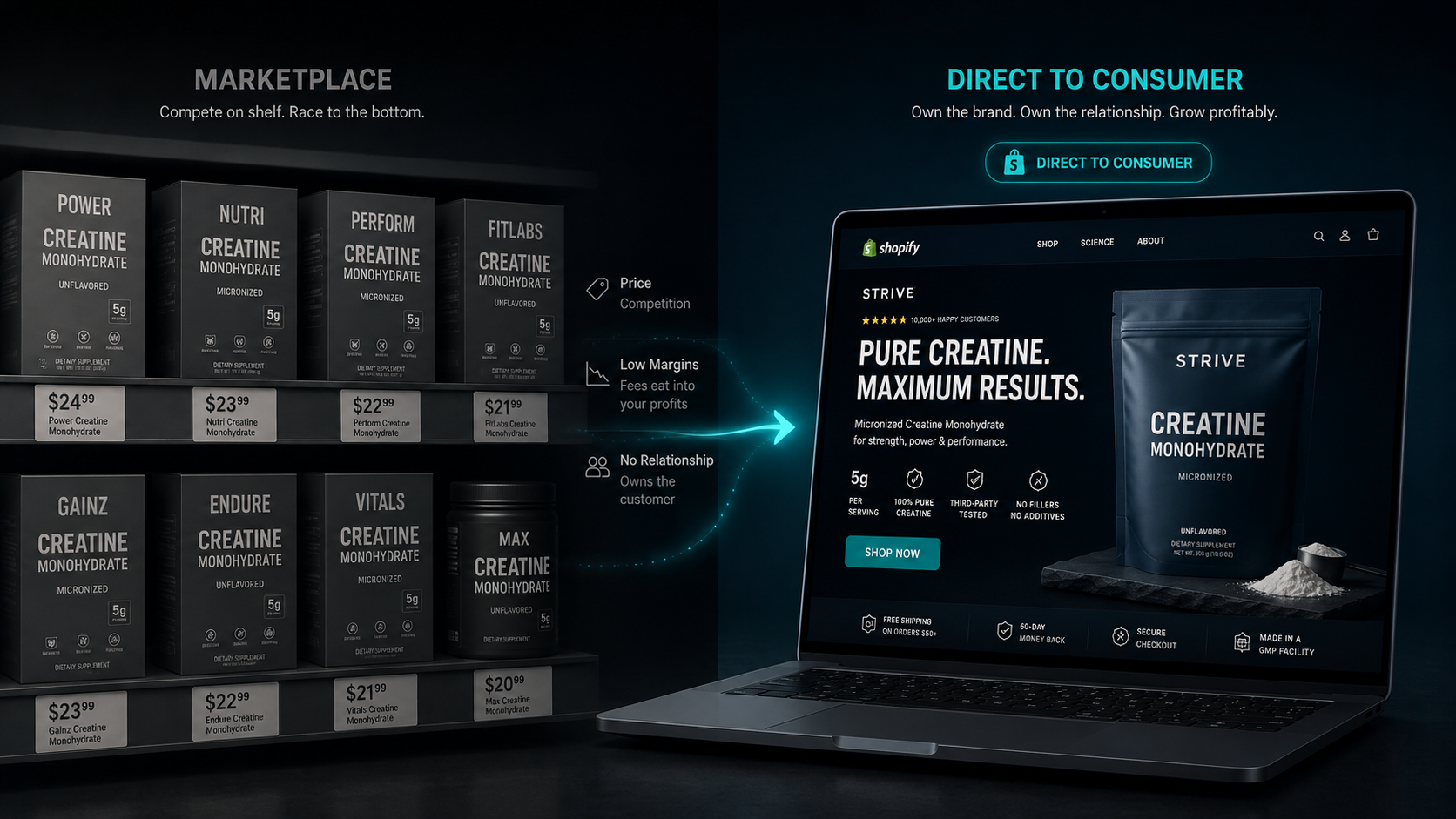
The trade-off is control. Marketplaces restrict access to customer data, dictate pricing competition, charge referral fees on every sale, and own the post-purchase relationship. You're renting shelf space in someone else's store — and that landlord can change the rules, the fees, or the algorithm at any time.
Why Shopify Brands Are Prioritizing Direct Selling in 2026
1. Full Control Over Brand Experience
D2C ecommerce gives a business full control over how the brand is represented and perceived at every consumer touchpoint — from the website design to the unboxing experience to the post-purchase email sequence. When you sell through intermediaries, the brand message often gets diluted or lost among competing products on the same page.
On Shopify, you control every pixel a customer sees. There's no competitor's "frequently bought together" widget pulling attention away from your product. There's no algorithm deciding whether your listing even gets seen.
2. Ownership of First-Party Data
This is arguably the single biggest strategic shift driving the D2C push in 2026. Direct sales provide first- and zero-party data critical for personalization and long-term retention, especially as third-party cookies become increasingly unreliable across the broader internet.
When a customer buys through your Shopify store, you get their email, their purchase history, their browsing behavior, and the ability to build a long-term relationship through retargeting, email flows, and loyalty programs. When they buy through a marketplace, you typically get none of that — the platform keeps it.
3. Higher Margins Without Marketplace Fees
On paper, D2C appears cheaper because there's no marketplace commission to pay on every sale. In practice, marketing costs can absorb some of that margin difference — but the brands that build strong repeat purchase cycles tend to balance this far better than one-off sellers.
Subscription brands in beauty, supplements, and apparel have shown notably stronger lifetime value metrics compared to one-time marketplace purchases, precisely because the margin saved on commission gets reinvested into retention rather than lost to a platform fee structure.
4. Faster Product Launches and Iteration
Cutting out the middleman makes a brand agile enough to respond swiftly to market changes or test new strategies without needing approval from a retail partner or navigating a marketplace's listing approval process. For fast-moving categories where trends shift quickly, that speed advantage compounds over time.
5. Building Toward AI-Driven Discovery
Discovery itself is shifting from traditional SEO toward AI-mediated research, where shoppers increasingly ask AI assistants for product recommendations rather than browsing search results or marketplace listings directly. Brands with strong, well-structured D2C websites — clear product data, reviews, and content — are better positioned to be surfaced by these AI discovery tools than brands that exist only as one listing among thousands on a marketplace.
The Honest Challenges of Going D2C
It's important not to oversell this. D2C has real structural challenges that have become more visible as the model has matured past its pandemic-fueled growth phase.
Rising customer acquisition costs. After privacy changes like Apple's App Tracking Transparency, the targeted digital advertising that allowed D2C brands to scale efficiently became significantly more expensive. In highly competitive niches, paid acquisition costs can exceed 25–30% of revenue during early growth stages.
You have to build your own traffic. Unlike marketplaces, where customers are already browsing, D2C brands must actively attract visitors through advertising, content marketing, social media, and SEO. Building brand awareness and customer trust from zero takes real time and consistent investment.
Unforgiving unit economics. If your gross margin is 80% on a $60 item, but shipping costs $15 and your customer acquisition cost is $40, you're losing money on the very first transaction. The 2026 D2C leader tracks contribution margin — revenue left over after deducting all variable costs tied to a specific order, including COGS, shipping, transaction fees, and acquisition cost — not just gross margin.
Operational responsibility shifts entirely to you. D2C involves managing order fulfillment, last-mile delivery, returns, and customer service directly. For brands used to marketplace fulfillment programs, this is a meaningful operational lift.
The Hybrid Approach: What Most Successful Brands Actually Do
Few serious brands choose only one channel anymore. The smartest operators in 2026 use marketplaces for discovery and scale, then actively work to redirect customers toward repeat purchases through their own D2C website.
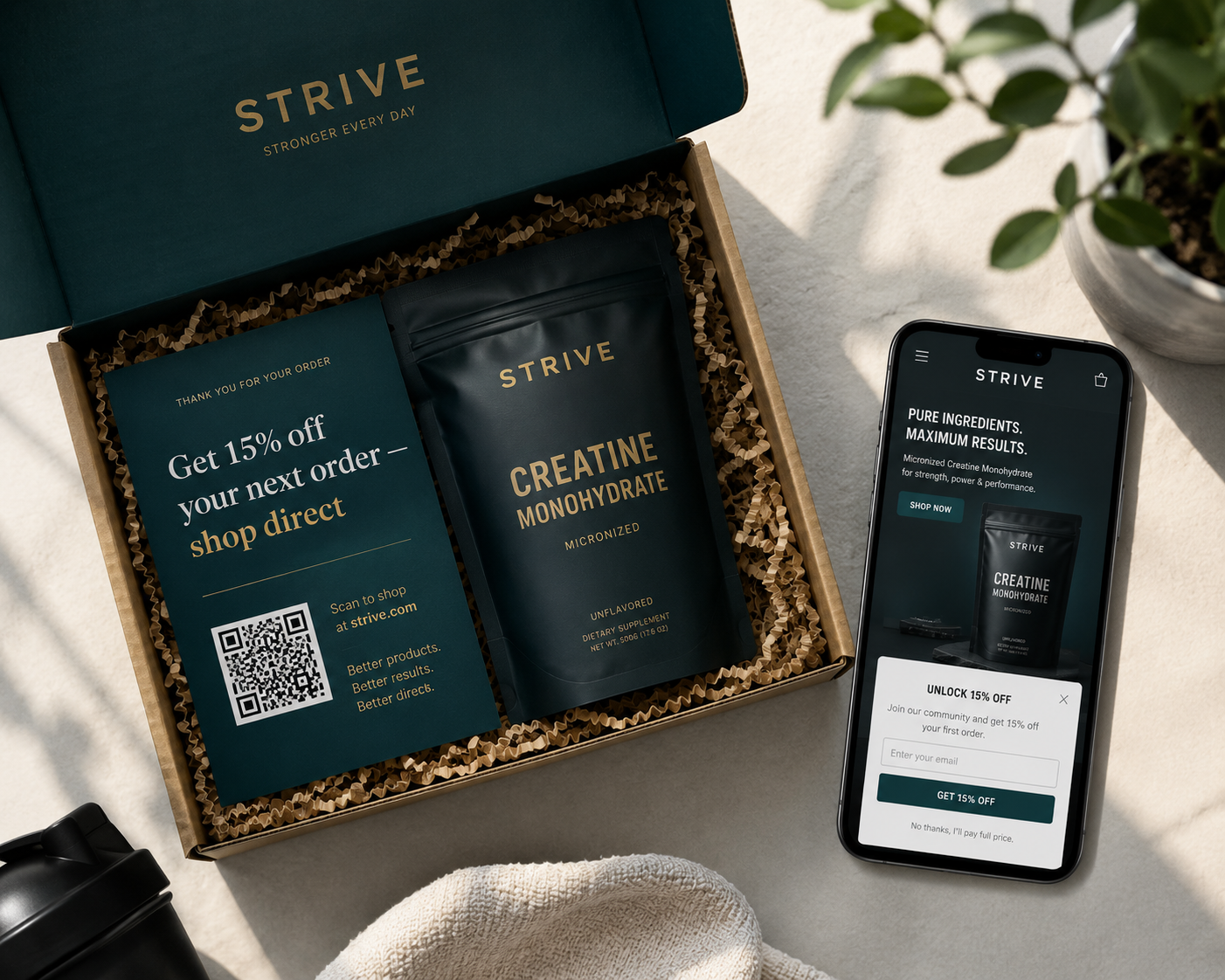
This typically looks like:
Marketplace listings drive first-time discovery. A new customer finds your product on Amazon because they were already searching that category. You make the sale, fulfill it well, and earn a positive review.
Packaging inserts redirect to your owned channel. A card in the box invites the customer to your Shopify store for an exclusive discount on their next order, or to join your email list for early access to new products.
Your D2C store handles retention. Once a customer is in your email list and has experienced your brand directly, future purchases — and especially subscription or repeat-purchase relationships — happen through your own store, where you keep the margin and the data.
For 2026, marketers are advised to treat D2C as one channel among several rather than a standalone identity — the strongest brands operate owned ecommerce alongside wholesale, marketplaces, retail media, and even physical retail.
How to Decide What's Right for Your Brand
If you're a Shopify brand owner trying to figure out where to focus your energy, here's a practical framework:
Choose marketplace-first if:
- You're launching a brand-new product with zero existing audience
- Your category has strong existing marketplace demand and search volume
- You need fast cash flow and can't sustain a long customer acquisition runway
- Your product doesn't have a strong repeat-purchase or subscription angle
Choose D2C-first if:
- You have a product with strong repeat-purchase or subscription potential
- Brand storytelling and identity are core to your value proposition
- You already have an audience, community, or following to convert
- You want to build long-term customer lifetime value rather than one-off transactions
Choose hybrid (most brands) if:
- You want marketplace reach to fund and accelerate D2C growth
- You're willing to invest in packaging, email capture, and post-purchase flows that redirect marketplace buyers to your own store
- You're building toward a long-term brand asset rather than just optimizing for short-term sales volume
Final Thoughts
The D2C versus marketplace debate isn't really about choosing a winner — it's about understanding what each channel is actually built to do, and using them accordingly.
Marketplaces are extraordinary discovery and distribution engines. They are not loyalty engines, brand-building tools, or data assets. D2C through Shopify is the opposite: it requires real investment to build traffic and trust, but it's where brand equity, customer relationships, and long-term margin actually live.
The Shopify brands pulling ahead in 2026 aren't abandoning marketplaces out of principle. They're using them strategically while deliberately building the owned channel that compounds in value over time — first-party data, repeat customers, and a brand customers actively seek out rather than stumble across.
If your business has been entirely marketplace-dependent, the smartest move isn't to walk away overnight. It's to start building the D2C side deliberately, one email list, one loyalty program, and one direct customer relationship at a time.
Need help building or optimizing your Shopify store to capture more direct, repeat customers? Get in touch with EcomFixify — we specialize in Shopify development and ecommerce growth strategy for brands moving toward D2C.