
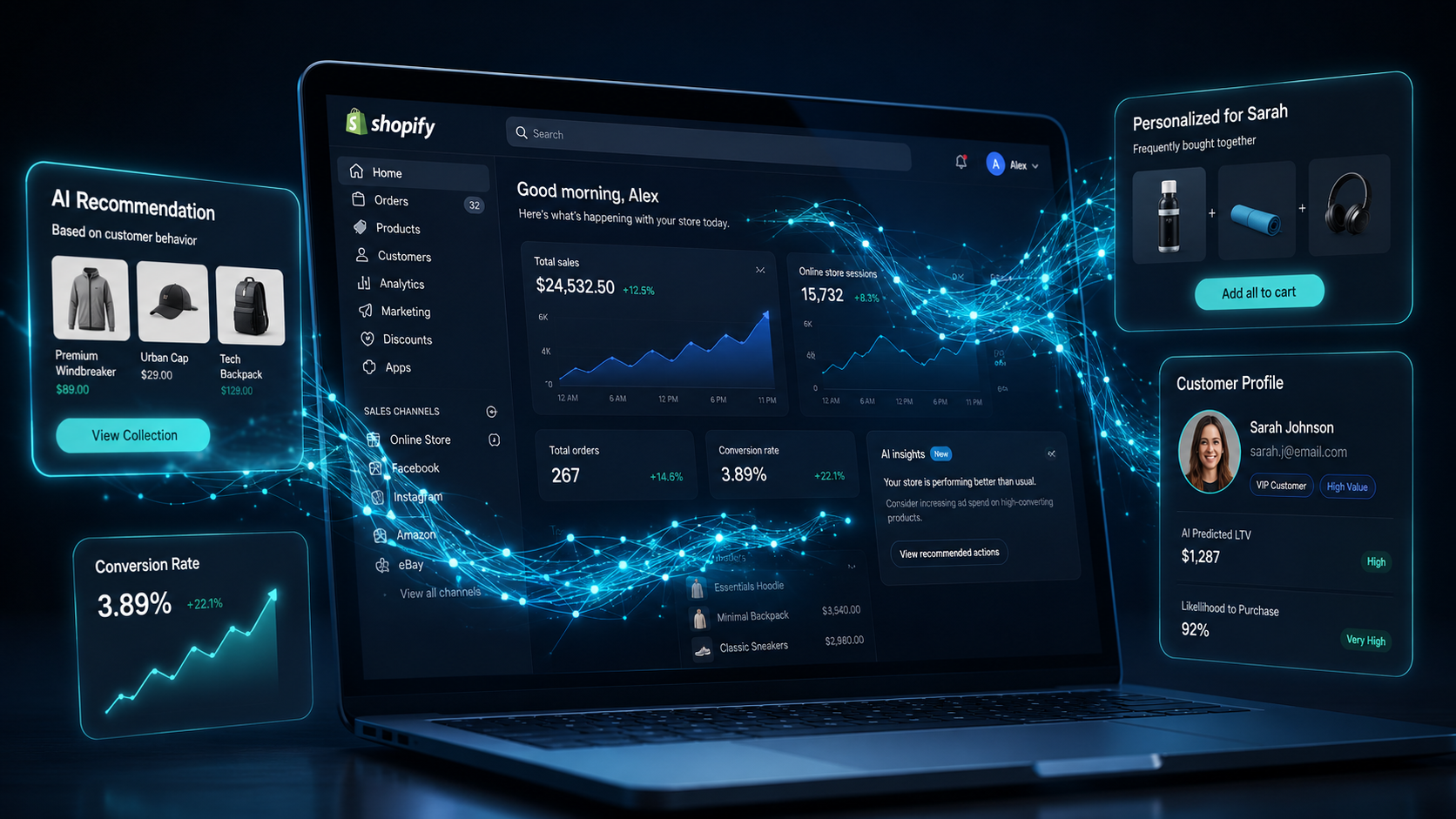
AI Personalization on Shopify: How to Get 20–40% More Conversions
How to Get 20–40% More Conversions
Most Shopify stores are leaving serious money on the table — not because they lack traffic, but because they treat every single visitor the same.
The first-time visitor from a Google ad sees the same homepage as the loyal customer who's bought from you six times. The shopper browsing sneakers gets the same email as someone who only ever buys accessories. That disconnect between what customers want and what they see is exactly where conversions die.
AI personalization fixes that at scale. And in 2026, it's no longer reserved for enterprise retailers with seven-figure tech budgets. The tools exist, they integrate directly with Shopify, and the results are measurable within weeks.
This guide breaks down exactly what AI personalization means for Shopify stores, which tactics move the needle most, and which tools to use — so you can start recovering the revenue your store is currently losing to generic experiences.
Why Generic Experiences Are Costing You Sales
Before diving into what to do, it's worth understanding how big the problem actually is.
80% of consumers are more likely to purchase when brands offer personalized experiences. 71% of consumers expect personalized interactions, and 76% get frustrated when they don't find them.
That frustration has a direct cost. 66% of consumers will stop buying from brands that don't personalize.
And the upside is just as significant. Stores using personalization see 10–25% revenue increases, 15–30% higher conversion rates, and 10–20% higher average order values. Personalized product recommendations alone account for 31% of ecommerce revenue for stores that implement them.
The gap between stores using personalization and those that aren't is widening every year. Only 45% of ecommerce stores use some form of personalization in 2026, up from 28% in 2023 — which means the majority are still competing with a significant disadvantage.
What Is AI Personalization on Shopify?
AI personalization is the practice of using machine learning and behavioral data to automatically tailor the shopping experience for each individual visitor — showing the right products, content, offers, and messages to the right person at the right moment.
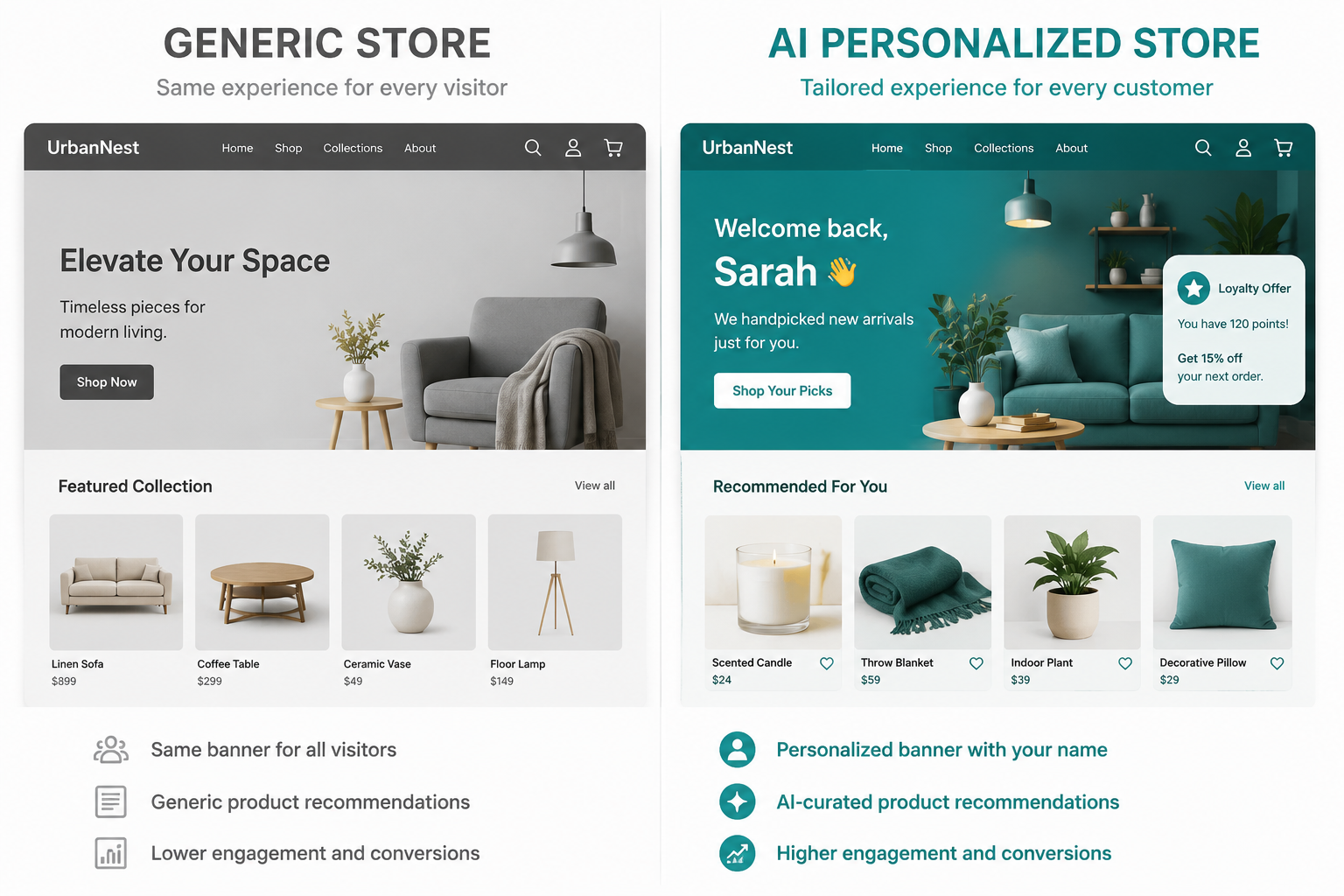
Unlike manual segmentation, which groups people into broad buckets and serves them the same experience, AI personalization works at the individual level. It analyzes dozens of signals simultaneously — browsing history, purchase behavior, search queries, time on site, device type, location, and more — and adjusts what each visitor sees in real time.
On a practical level, this means:
- A returning customer's homepage shows products related to their last purchase, not your bestsellers
- A visitor who browsed running shoes twice gets a cart page upsell for running socks, not a random accessory
- An email triggered by cart abandonment shows the exact product left behind, with a personalized subject line and a complementary recommendation
- A shopper who's bought from you three times sees a loyalty discount; a first-time visitor sees a welcome offer
These aren't hypothetical scenarios. They're standard capabilities of tools that plug directly into Shopify today.
The 5 Highest-Impact AI Personalization Tactics for Shopify
Not all personalization is equal. Some tactics are gimmicks that add complexity without moving revenue. These five are the ones with the strongest conversion data behind them.
1. AI-Powered Product Recommendations
This is the single highest-ROI personalization lever available to Shopify merchants. Product recommendations account for just 7% of site traffic but generate 24% of orders and 26% of revenue. Sessions where shoppers engage with recommendations show a 369% increase in average order value.
The key distinction is between basic "related products" (which show items from the same category regardless of who's looking) and AI-powered recommendations (which analyze that specific visitor's behavior to surface what they're most likely to want next).
Stores using personalized product recommendations have reported conversion rate increases of up to 35% and average order value growth of 15%.
Place AI recommendations at three critical touchpoints:
-
Product pages— "You may also like" based on browsing patterns
-
Cart page — "Frequently bought together" based on cart contents
-
Post-purchase — Complementary products shown immediately after checkout
Tool to use: Rebuy Personalization Engine is the Shopify standard here. Rebuy uses AI to deliver smart product recommendations, upsells, and cross-sells across key touchpoints like the cart, checkout, and post-purchase flow. Its Smart Cart dynamically recommends products and adapts based on customer behavior in real time.
2. Personalized Email Flows
Email is still the highest-ROI owned marketing channel — but only when it's behavioral and personalized, not batch-and-blast.
Klaviyo's 2026 benchmark data across 183,000+ ecommerce brands reveals that automated flows generate 41% of total email revenue from just 5.3% of sends, with average revenue per recipient nearly 18x higher than standard campaigns.
Segmented and personalized email campaigns generate 6 times higher transaction rates and AOV than non-personalized emails.
The flows that deliver the most immediate lift:
-
Abandoned cart emails with the exact product left behind — personalized abandoned cart emails recover 15–25% of abandoned carts.
-
Browse abandonment— triggered when someone views a product multiple times without buying
-
Post-purchase sequences— personalized based on what was bought, suggesting natural next purchases
-
Win-back flows— triggered by inactivity, with offers calibrated to purchase history
Tool to use: Klaviyo is the Shopify email standard, with deep native integration and AI-powered segmentation built in.
3. Dynamic On-Site Content
Your homepage hero banner, featured collections, and promotional banners shouldn't look the same for every visitor. AI-powered dynamic content swaps these elements based on who's viewing them.
In one 30-day test, a beauty brand saw a 14% rise in product detail page visits simply by greeting returning visitors with personalized modules — replacing generic banners with "Because you liked X" sections.
For Shopify stores, the most impactful dynamic content placements are:
- Homepage hero— new visitor vs. returning customer messaging
- Featured collections— ordered by individual browse history rather than static sorting
- Promotional banners— showing relevant sale categories rather than the same offer to everyone
Real-time personalization delivers 20% higher conversion rates compared to batch processing approaches. Companies excelling in real-time personalization see 40% revenue increases versus competitors.
4. Personalized Site Search
Most store owners treat search as a utility — something that either works or doesn't. But personalized search is one of the most underleveraged conversion tools in the Shopify ecosystem.
Standard search returns results ranked by relevance to the query. Personalized search also factors in that visitor's purchase history, browsing patterns, and preferences — surfacing products they're actually likely to buy, not just products that match the keywords.
Personalized search results deliver 15–28% conversion lift. Onsite search that personalizes results by behavior improves conversion by 15–30%. Personalized search result reorderings reduce time-to-purchase by 10–25%.
This matters most for stores with large catalogs. When a shopper searches "black dress" and gets 200 results in generic order, they're likely to bounce. When the results are ordered by their style preferences and price range, they find what they want faster.
5. AI-Driven Pricing and Offers
This doesn't mean dynamic pricing in the predatory sense — it means showing the right incentive to the right person at the right moment. AI can personalize discount offers based on purchase history and predicted behavior. 56% of customers will repurchase from a company if they receive personalized loyalty discounts and rewards. Providing personalized offers based on customer behavior can lead to a 20% higher AOV than generic promotions.
In practice, this looks like:
- First-time visitors see a welcome discount to reduce purchase hesitation
- High-value returning customers get early access or loyalty-only offers
- Price-sensitive shoppers (identified by behavior patterns) see bundle deals rather than full-price upsells
The Shopify Personalization Stack Worth Building
You don't need a dozen apps. A focused stack covering the core touchpoints delivers the majority of the results:
Product Recommendations: Rebuy or LimeSpot Personalizer Both analyze browsing and purchase data to serve AI-powered suggestions across product pages, cart, and post-purchase. Rebuy's Smart Cart is particularly powerful for AOV lift.
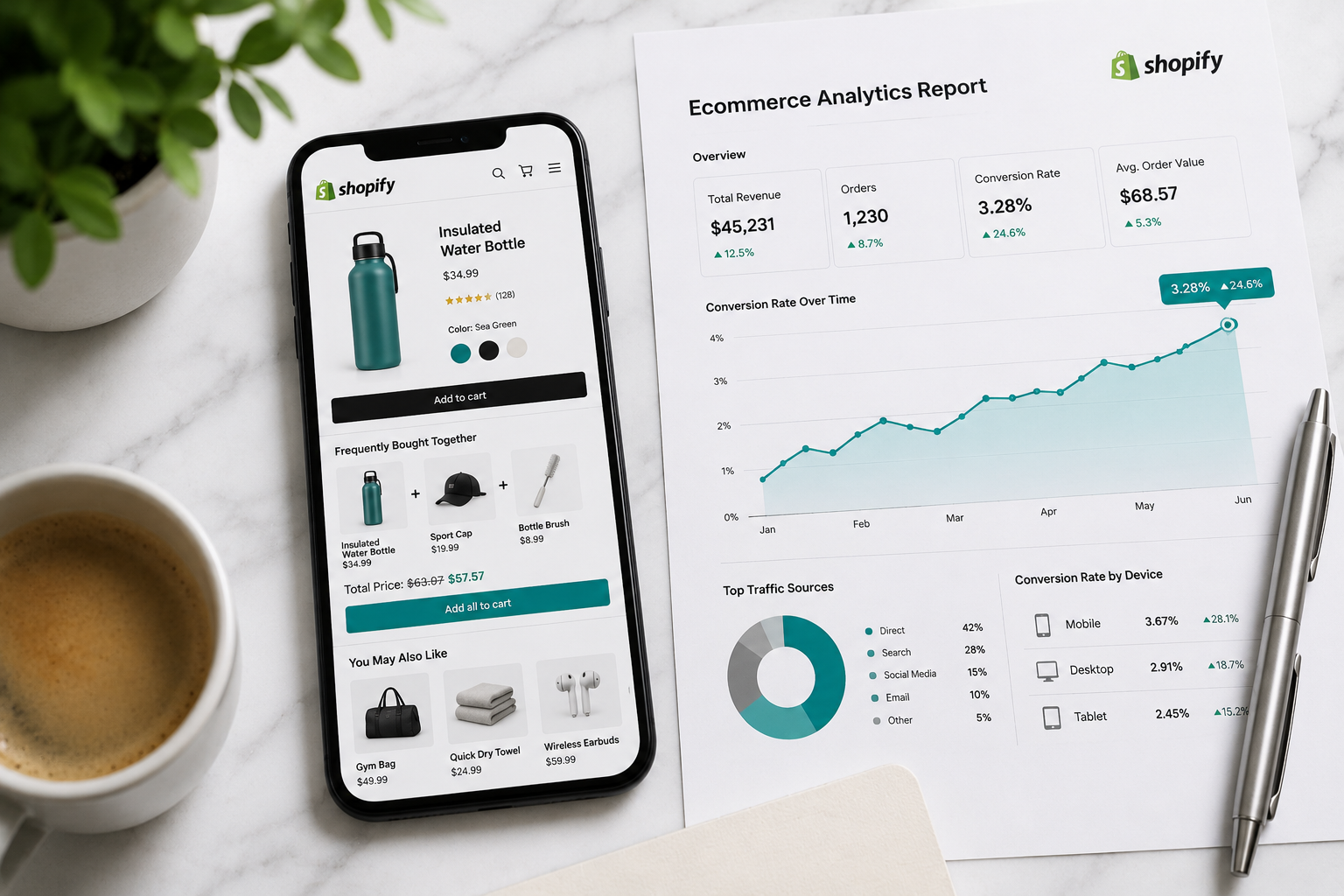
Email Personalization: Klaviyo Native Shopify integration, AI-powered segmentation, behavioral flows, and predictive sending time. The benchmark standard for Shopify email.
Personalized Quizzes: Octane AI Generates personalized recommendations based on shopper responses matched to your Shopify catalog. Captures rich customer profiles through interactive experiences, which you can use for email segmentation and ongoing personalization.
Behavior Analytics: MIDA or Hotjar Before adding personalization tools, understand where visitors currently drop off. MIDA shows exactly where shoppers click, hesitate, or drop off, with visibility into checkout pages, customer profiles, and the exact sessions behind abandoned carts.
SMS Personalization: TxtCart AI-powered SMS that sends automated, human-like text messages recovering carts and driving repeat purchases through personalized conversational flows.
How to Prioritize: Start Here
If you're new to personalization, don't try to implement everything at once. The sequence that delivers the fastest ROI with the least complexity:
Weeks 1–2: Install Rebuy and set up "Frequently Bought Together" on product pages and cart. This single change typically delivers a 5–15% AOV lift within the first two weeks.
Weeks 3–4: Set up Klaviyo's abandoned cart flow with personalized product blocks. This recovers revenue from customers who were already close to buying.
Weeks 5–8: Build a browse abandonment email flow and a post-purchase recommendation sequence. By this point, you'll have meaningful data on what's working.
Weeks 9–12: Add a quiz flow to collect zero-party data and start using it to personalize email segments and homepage content for returning visitors.
These three tactics alone — cart and browse abandonment flows, "frequently bought together" modules, and RFM-based email segmentation — typically deliver a 15–25% revenue increase and can be implemented within 2–4 weeks.
What Realistic Results Look Like
The 20–40% conversion lift referenced in this article's title isn't a best-case scenario — it's the documented range across well-implemented personalization programs.
Ecommerce personalization delivers 5–8x ROI on implementation costs.
AI-driven personalization experiences increase customer lifetime value by 33% according to BCG's research. Salesforce data shows that 65% of consumers are more likely to stay loyal to brands that deliver personalized experiences. The timeline matters too. Most Shopify merchants see initial improvements within 2–4 weeks of implementing AI recommendations. Full compounding results — where behavioral data has accumulated and the AI has enough history to make high-accuracy predictions — typically emerge within 90 days. The merchants who get the most out of personalization treat it as an ongoing system, not a one-time setup. They track recommendation click-through rates, monitor AOV changes by segment, A/B test placement and copy, and continuously refine based on what the data shows.
Common Mistakes That Kill Personalization Results
Installing the tools without cleaning the data. AI recommendations are only as good as the product data they work from. If your product titles, tags, and collections aren't organized consistently, the algorithm produces irrelevant suggestions. Fix your catalog structure before adding recommendation apps.
Recommending out-of-stock products. This is one of the fastest ways to erode trust in your personalization. Set exclusion rules in your recommendation apps to automatically filter out unavailable inventory.
Over-personalizing too early. New stores with limited traffic don't have enough behavioral data for AI to work well. If you have fewer than 500 monthly visitors, start with manual segmentation (new vs. returning, by category) rather than individual-level AI.
Ignoring mobile. Personalized product recommendations on mobile increase conversion rates by 20–30% because they reduce the browsing effort required on smaller screens. If your personalization setup isn't tested and optimized for mobile specifically, you're missing the majority of your traffic.
Treating it as set-and-forget. The AI improves with more data, but the placements, copy, and offer structures need periodic human review. Check your recommendation app analytics at least monthly.
Final Thoughts
The math on AI personalization is straightforward. Every visitor who lands on your Shopify store has already demonstrated some level of interest — they clicked something, searched something, or followed a recommendation. The question is whether your store responds to those signals or ignores them.
Generic stores show everyone the same thing and hope it lands. Personalized stores show each visitor something relevant to them — and the conversion difference between those two approaches is measurable, significant, and growing every year.
The tools are accessible, the integrations are native, and the results are documented. The only question is how long you want to wait before implementing them.
Need help setting up AI personalization on your Shopify store, or want an expert to audit what's currently costing you conversions? Get in touch with EcomFixify — we specialize in Shopify performance optimization and conversion rate improvement.